BATTERY PACKAGING
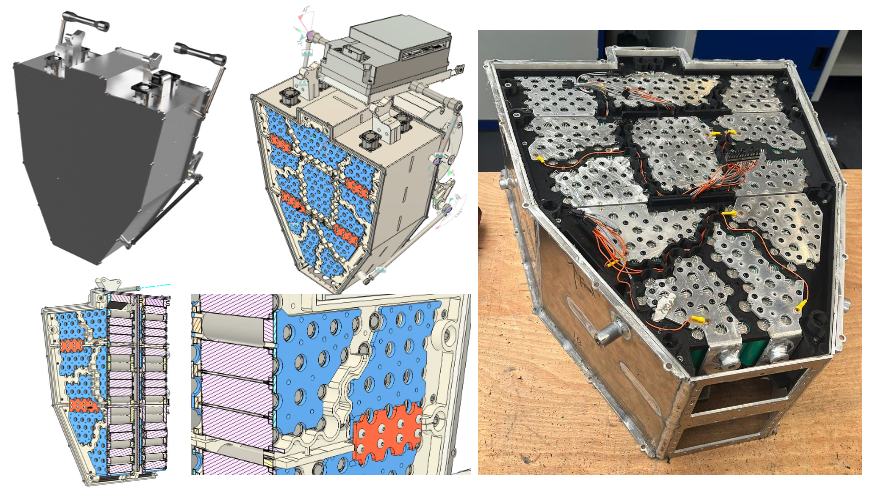
Supported detailed battery packaging within the motorcycle, checking clearances, interfaces and assembly access while keeping the CAD structure suitable for downstream manufacture and updates.

STUDENT COMPETITION · MOTOSTUDENT
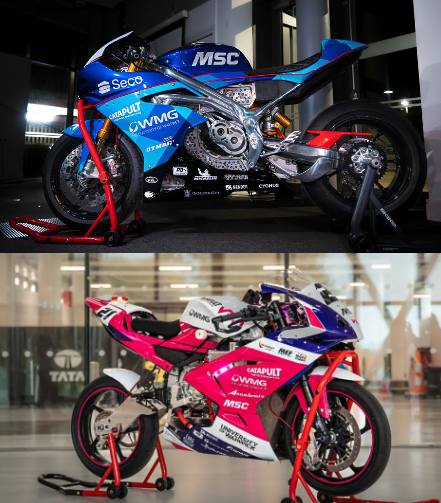
Manufacturing & CAD Engineer within Warwick Moto, developing production-ready components and assemblies for an electric MotoStudent prototype while supporting CAD governance, technical drawings and submission readiness.
AUTODESK FUSION · CAD SURFACING · TECHNICAL DRAWINGS · GD&T · DFM
01
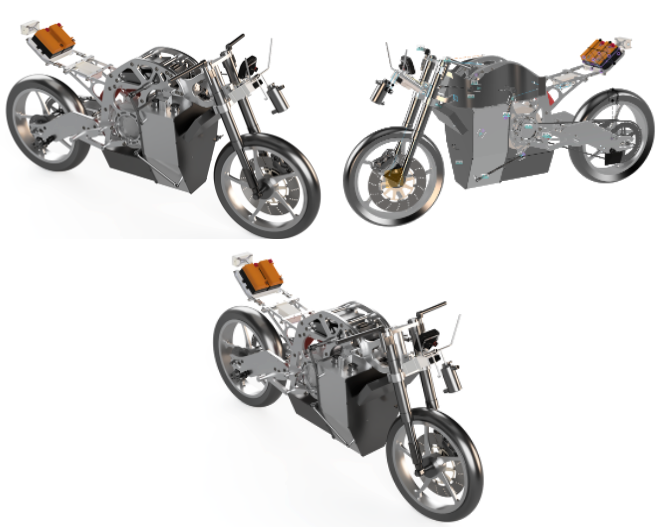
My role combined CAD development with manufacturing readiness. Alongside designing components, I supported the wider vehicle CAD structure so parts and assemblies followed the required naming convention, remained easy to edit and were prepared correctly for MotoStudent submission.
02
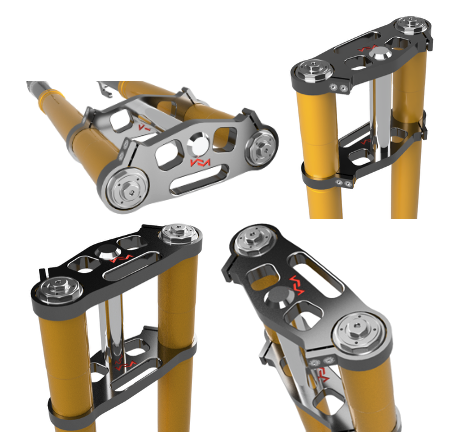
Developed the upper yoke / top triple clamp as a lightweight, manufacturable component, balancing packaging, stiffness, machinability and visual integration with the front-end assembly.
03
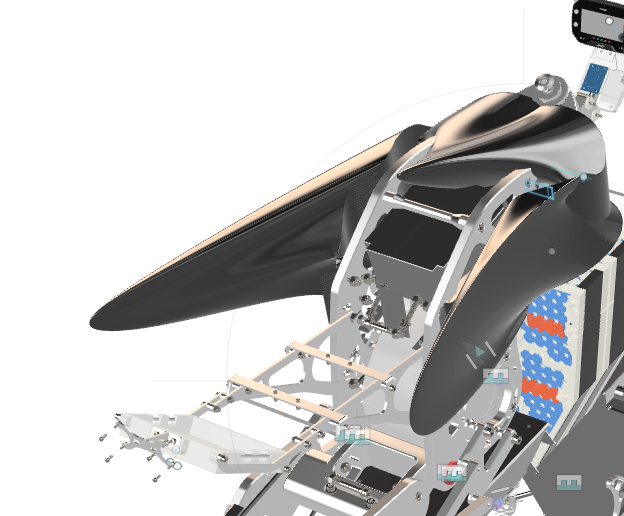
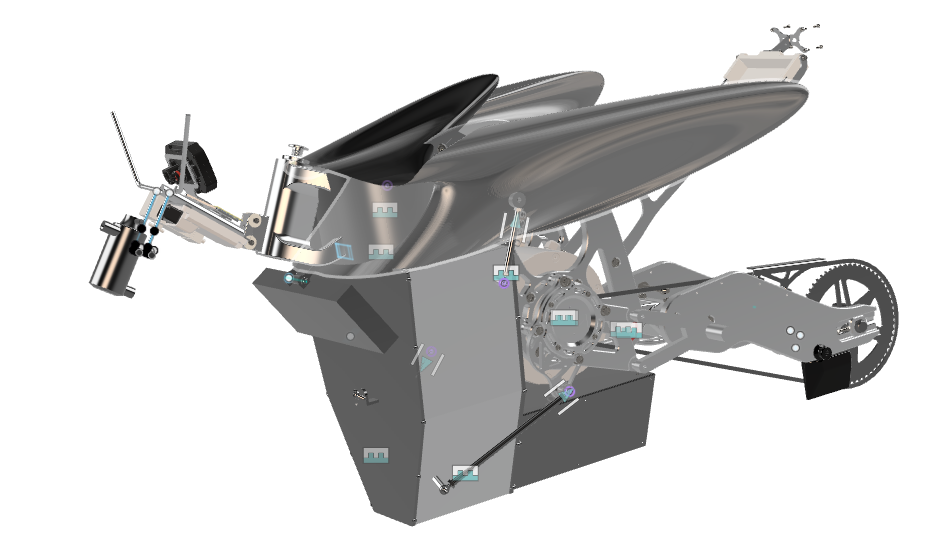
Surface development around the sump and battery region was used to help guide external airflow toward the battery enclosure. The work focused on integrating the cooling concept with the existing chassis and bodywork while preserving manufacturable, editable geometry.
04
Supported detailed battery packaging within the motorcycle, checking clearances, interfaces and assembly access while keeping the CAD structure suitable for downstream manufacture and updates.
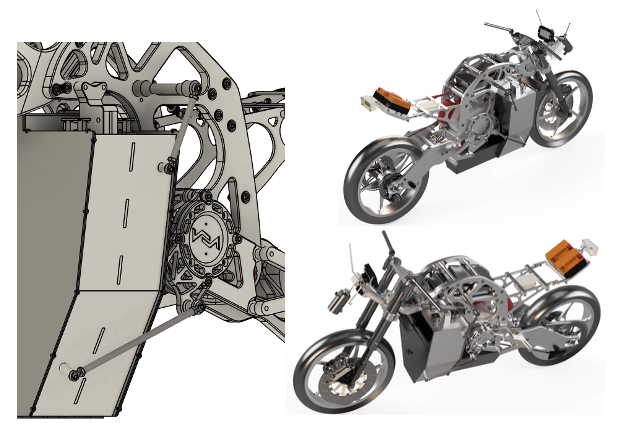
Component and subsystem geometry was continually checked within the full motorcycle assembly to ensure interfaces remained compatible as the design evolved.
05
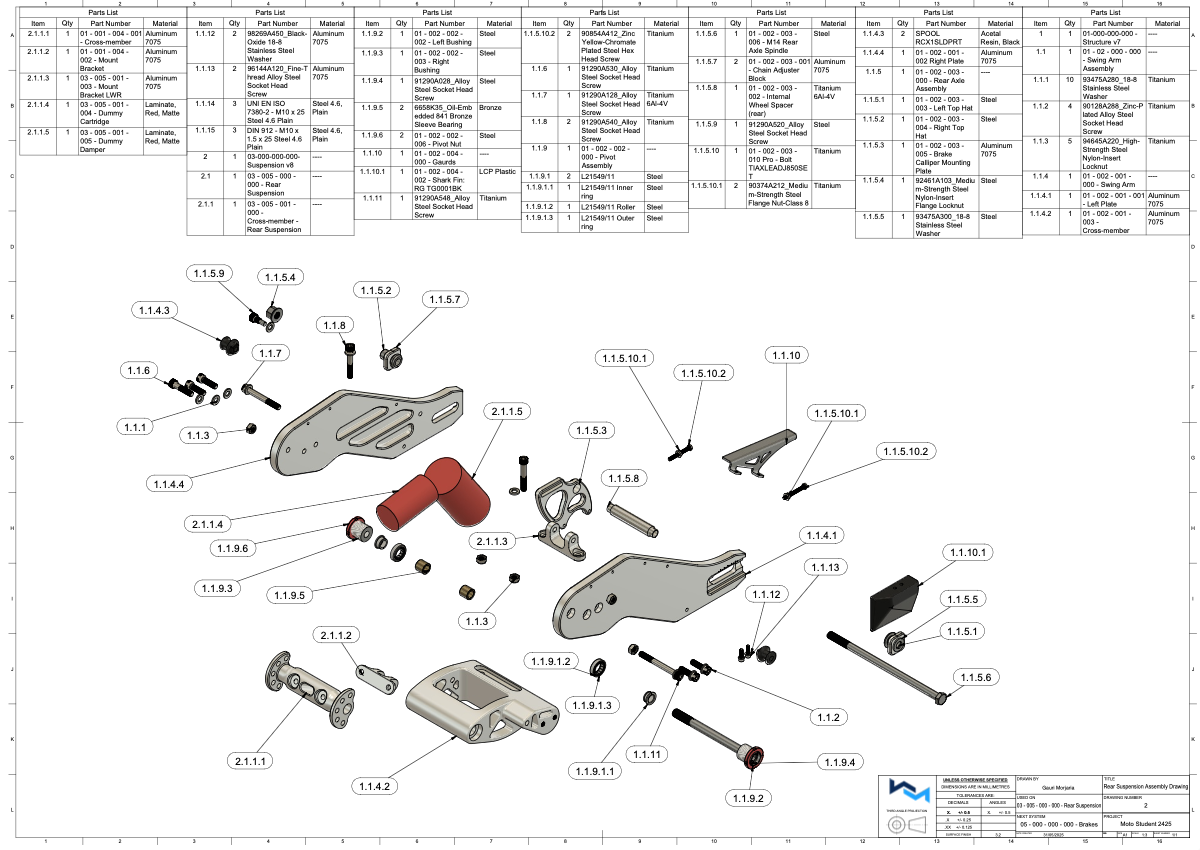
A significant part of the role was ensuring that the CAD database remained usable by the wider team. Parts and assemblies were structured to match the competition naming rules, designed to be straightforward to modify, and documented through production-ready technical drawings.
06
CAD decisions were developed with machining, assembly and production constraints in mind rather than geometry alone.
Working within the complete motorcycle highlighted the importance of interfaces, packaging and controlled CAD structure.
Technical drawings, naming conventions and assembly structure ensured design intent could be understood and manufactured by others.
“Warwick Moto developed my understanding that good CAD is not only about creating geometry. It must also be manufacturable, structured, editable and clear enough for the wider engineering team to use.”