- Supported race-weekend vehicle performance activities, using ATLAS telemetry for pre-event preparation, live session support and post-event performance analysis.
- Planned and supported Driver-in-the-Loop (DiL) development sessions, defining test programmes, analysing performance and automating engineering reporting using Python.
- Supported Multi-Post Rig, K&C, MOI and Brake Dyno testing, contributing to test preparation, data acquisition and analysis to characterise vehicle behaviour.
- Developed Python engineering tools for automated DiL reporting and Power Assisted Steering (PAS) validation, improving workflow efficiency and consistency.
- Conducted simulation-based vehicle performance studies, assessing vehicle behaviour and development opportunities to support engineering decisions.
- Developed trackside ATLAS workbooks, tools and procedures for setup, ride-height, suspension, plank and PAS checks, improving operational robustness.
- Led cross-functional development of 2026 & 2027 pit-stop and vehicle setup equipment, from 3DX design through manufacture, testing and validation.
- Developed an Energy Management System (EMS) technical guide and supported race-weekend energy deployment competitor strategy analysis.
- Queried and analysed large vehicle datasets using SQL and Python (Pandas), extracting and processing relevant data to support engineering analysis and reporting.
ENGINEERING · MOTORSPORT · PERFORMANCE · DEVELOPMENT
ABOUT ME
A little about who I am, what drives me and the experiences that continue to shape my engineering journey.
GAURI MORJARIA
ENGINEERING
MOTORSPORT
PERFORMANCE
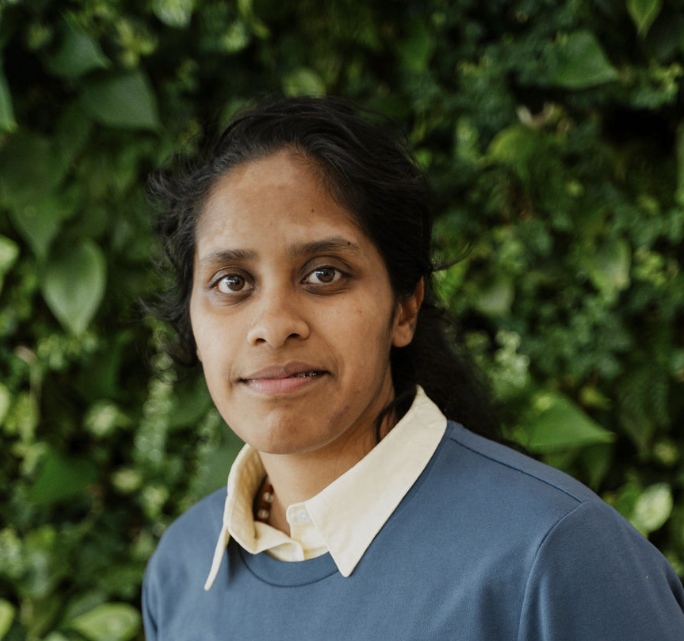
My journey into engineering started unexpectedly. When I was 6 years old, I was fascinated by the miniature Formula 1 cars at my local Shell Garage. Little did I know that small encounter would spark an interest in motorsport and engineering that has continued to shape the path I have taken.
Growing up, sport played a huge part in my life. I represented England in badminton and competed internationally in tennis, experiences that taught me the importance of discipline, teamwork and continually pushing myself. Alongside this, discovering F1 in Schools and F24 Greenpower gave me my first opportunity to turn an interest in Formula 1 into something practical — designing, building and working as part of an engineering team.
Today, I am studying Mechanical Engineering at the University of Warwick and continuing to build my experience within motorsport. What started as a childhood fascination has developed into a drive to understand how cars perform, why they behave the way they do, and how engineering can make them faster.
MY JOURNEY
EXPERIENCE
- Produced detailed part and assembly drawings for high-performance motorcycle components, applying DFM principles.
- Led composite fairing, battery cooling and chain-guard design, optimising integration, performance and manufacturability.
- Developed a parametric modelling system to accelerate design iterations and maintain technical compliance.
- Evaluated additive and conventional manufacturing methods using failure-mode and load analysis.
- Designed modular battery modules and casing, optimising wire routing and loom-to-busbar integration for electrical reliability.
- Contributed to the delivery of two complete EV motorcycles in 10 months, achieving 7th of 42 international teams for CAD quality and prototype delivery.
- Used Rhino, Grasshopper and Butterfly to develop geometry, extract engineering data and perform CFD analysis.
- Designed a windcatcher funnel in CAD and manufactured prototypes using SLS printing and laser cutting.
- Participated in engineering consultancy and design reviews, supporting multidisciplinary design development.
- Produced technical reports and presentations in Adobe InDesign for director-level design reviews.
- Authored DIC testing procedures and technical reports, establishing standardised guidance for future simulation validation.
- Adopted BS ISO standards for specimen preparation and testing protocols, ensuring repeatable data collection for material performance analysis.
- Authored comprehensive reports on DIC testing procedures and findings, creating standardised guidelines for future simulation validation.
- Designed and delivered PCB-based low/high-voltage systems, including shutdown and brake-light circuits for the WRe2 Formula Student car.
- Used EasyEDA and Autodesk Inventor to design and document electrical systems, collaborating across mechanical and manufacturing teams for vehicle integration.
- Performed PCB soldering, testing and fault diagnosis, resolving electrical issues through iterative validation.
- Applied Cetol 6σ, RecurDyn, Particleworks and SolidWorks to dynamic modelling and engineering simulation.
- Supported GD&T analysis and multi-body dynamics simulations for client engineering projects.
- Developed Python and JavaScript engineering tools to automate data processing, visualisation and simulation-driven analysis.
- Collaborated within an international engineering team to develop a high-performance electric race car.
- Designed and analysed vehicle components using CAD, material testing and engineering calculations.
- Developed steering geometry using Ackermann principles and rack-and-pinion kinematics.
- Analysed front and rear-wing aerodynamics using CFD to support aerodynamic package development.
- Applied engineering calculations to powertrain parameter optimisation.
CONTINUED GROWTH
PERSONAL DEVELOPMENT
- Developed aerodynamic concept surfaces using parametric CAD techniques aligned with F1 development workflows.
- Developed aero geometry from initial wireframes through to controlled tangent surface construction.
- Used construction and reference surfaces to control geometry, intersections and feature relationships.
- Applied tangency, curvature and surface continuity principles to create smooth, robust aero geometry.
- Built structured CATIA 3DEXPERIENCE model trees with interchangeable geometry for efficient design iteration.
- Created parametric models allowing key geometry changes without rebuilding the complete CAD model.
- Integrated regulatory legality boxes and dimensional constraints to continuously verify concept compliance.
- Developed understanding of F1 aerodynamic fundamentals, including pressure distributions, boundary layers, vortices and aerodynamic balance.
- Studied F1 aerodynamic development methodology, from structured problem-solving and concept evaluation to performance-driven decisions.
- Developed understanding of CFD analysis and interpretation within an aerodynamic development workflow.
- Explored wind-tunnel testing and CFD correlation, including the challenges of translating simulation to physical testing.
- Studied the relationship between aerodynamic performance and lap time, including circuit requirements and setup trade-offs.
- Selected as 1 of only 14 students nationwide for the Aleto Foundation x Aston Martin F1 Leadership Programme, an 11-month initiative focused on leadership and career development.
- Completed 12+ mentorship sessions with a Senior R&D Engineer at Aston Martin F1, gaining insider knowledge of F1 Test and Development pipeline, career pathways, and industry practices.
- Strengthened communication, presentation and teamwork skills through collaborative activities and engagement with industry professionals.
- Gained hands-on experience and enhanced technical, presentation, and networking abilities during a 1-week work placement at Aston Martin F1 Campus.
- Selected as 1 of 60 scholars from 750+ applicants for a prestigious STEM leadership programme.
- Built a strong STEM network through mentorship sessions and hands-on development events at McLaren Technology Centre, with support from McLaren Racing partners Google, Cisco, and Deloitte.
- Gained practical skills and career insights from McLaren leaders and partners, with flexible upskilling opportunities provided by Udemy.
ALWAYS LEARNING. ALWAYS DEVELOPING.